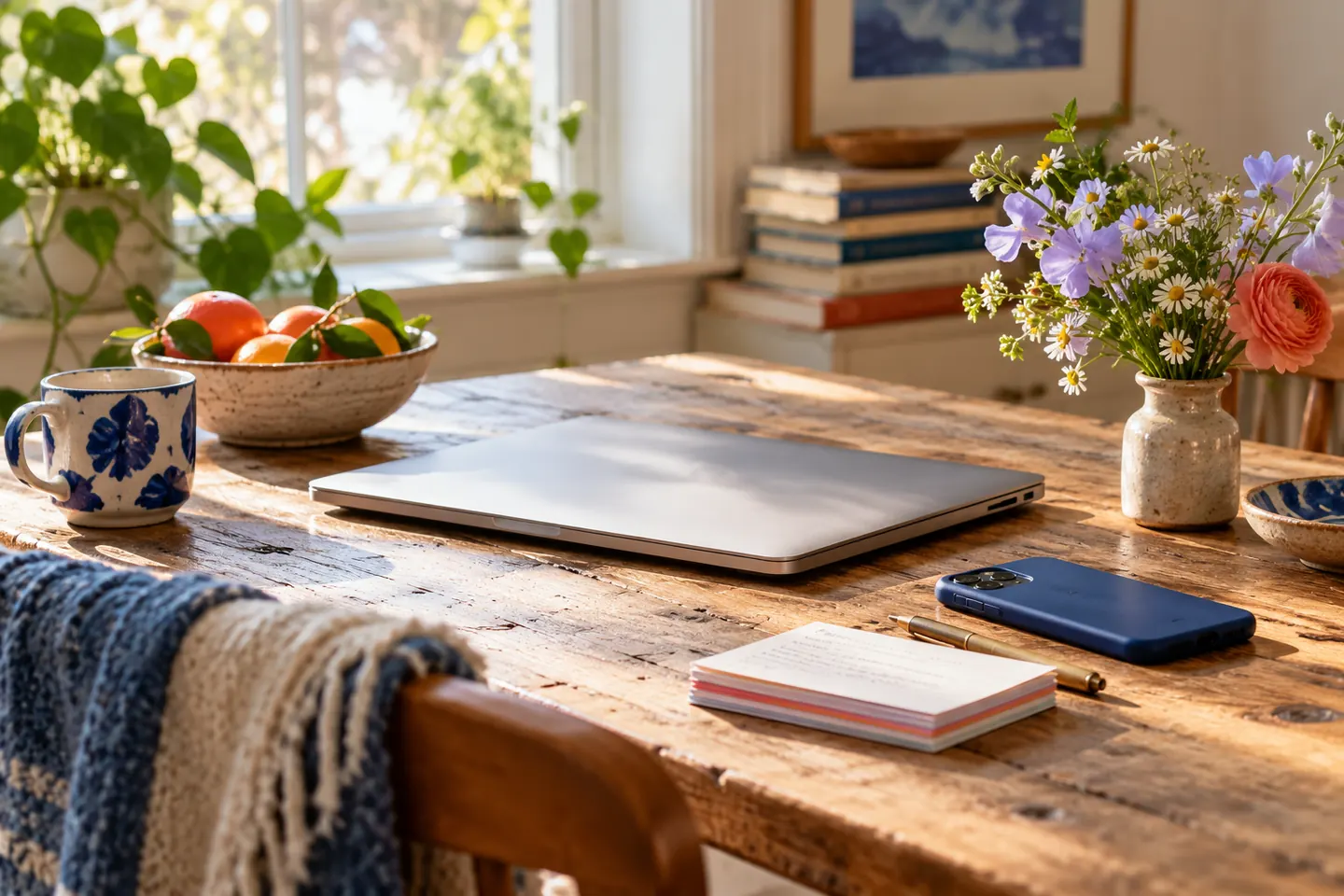
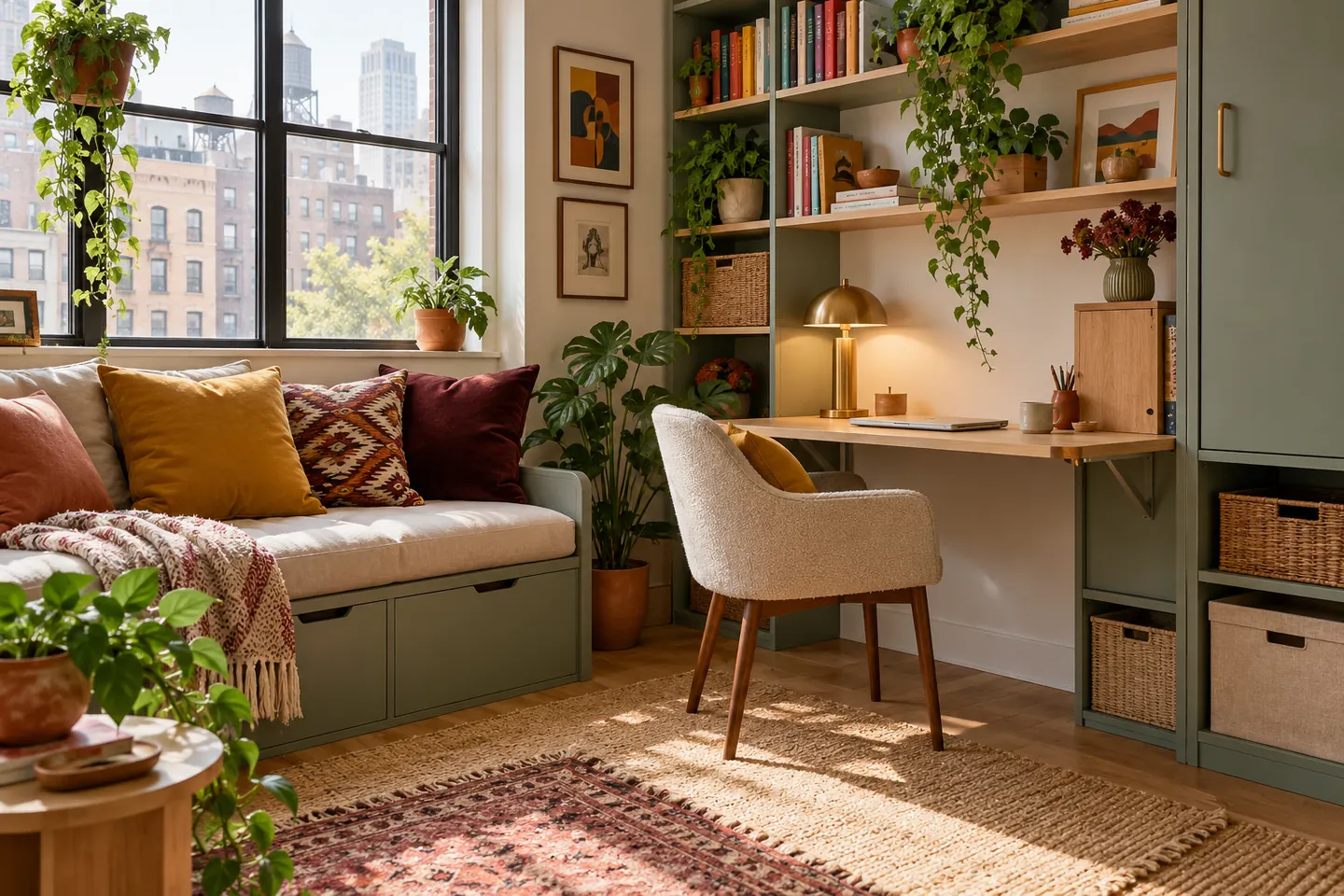
A small room is often asked to do several jobs at once. A table becomes a desk, a place to eat, and a landing spot for everything carried through the door. It is tempting to respond by adding more organizers. But before a new shelf can help, it is worth asking a simpler question: what actually happens here each day?
The answer may reveal that the problem is less about the room's size than about the handoffs between its different uses.
Notice the activities, not just the objects
Walk through a typical day and name the activities that occur in the space. Perhaps you work at the table in the morning, share a meal there in the evening, and sort paperwork on weekends. Each activity has a starting setup and an ending state. The friction often appears when the first setup is left in the way of the next one.
Write down the few things each activity truly needs. A work session may need a laptop, charger, notebook, and water. If those four items can travel together in a tray or bag, changing the table's role becomes much easier. This is not a rule that every object needs a container. It is a way to reduce the number of decisions between one use and another.
Protect the paths you use most
The clearest floor plan can still fail if a chair blocks a door or a cabinet cannot open fully. Notice where you walk, turn, sit, and reach. Keep the path between frequently used places easy to follow. A piece of furniture that fits by measurement may still make a room harder to live in if it interrupts those movements.
Try moving existing pieces before buying anything. A lamp shifted to another corner or a table turned in a new direction can change how useful the space feels. Live with the change for a few days. The first impression is helpful, but daily use is a better test.
Look for repeated bottlenecks
- What collects beside the door because it has no next place?
- Which item must be moved every time you use the table?
- Where do cables or papers interrupt another activity?
- What do you reach for daily but store far away?
Each answer points to a small change with a clear purpose. A hook may help with a bag that always lands on a chair. A document folder may help if papers repeatedly cover the table. Neither is useful simply because it looks tidy in a photograph.
Let storage match how often you use things
Keep frequent items easy to reach and occasional items farther away. This sounds obvious, yet spaces often drift toward the opposite pattern: rarely used things hold the convenient spots because they arrived first. Revisiting one shelf or drawer at a time can restore a better order without requiring a whole-room project.
Leave some surfaces partly clear if they need to change roles during the day. Empty space can be functional. It gives you somewhere to put down a meal, open a book, or begin a task without clearing yesterday's materials first.
Choose changes by the effort they save
When considering a purchase, ask which recurring action it will make easier. If the answer is vague, wait. Small spaces benefit from restraint because every new object occupies room and asks to be managed.
The most useful arrangement may look ordinary: a clear route, a reachable set of everyday items, and a quick way to switch the room from one purpose to another. The measure is how well the space supports your life when nobody is taking a picture of it.